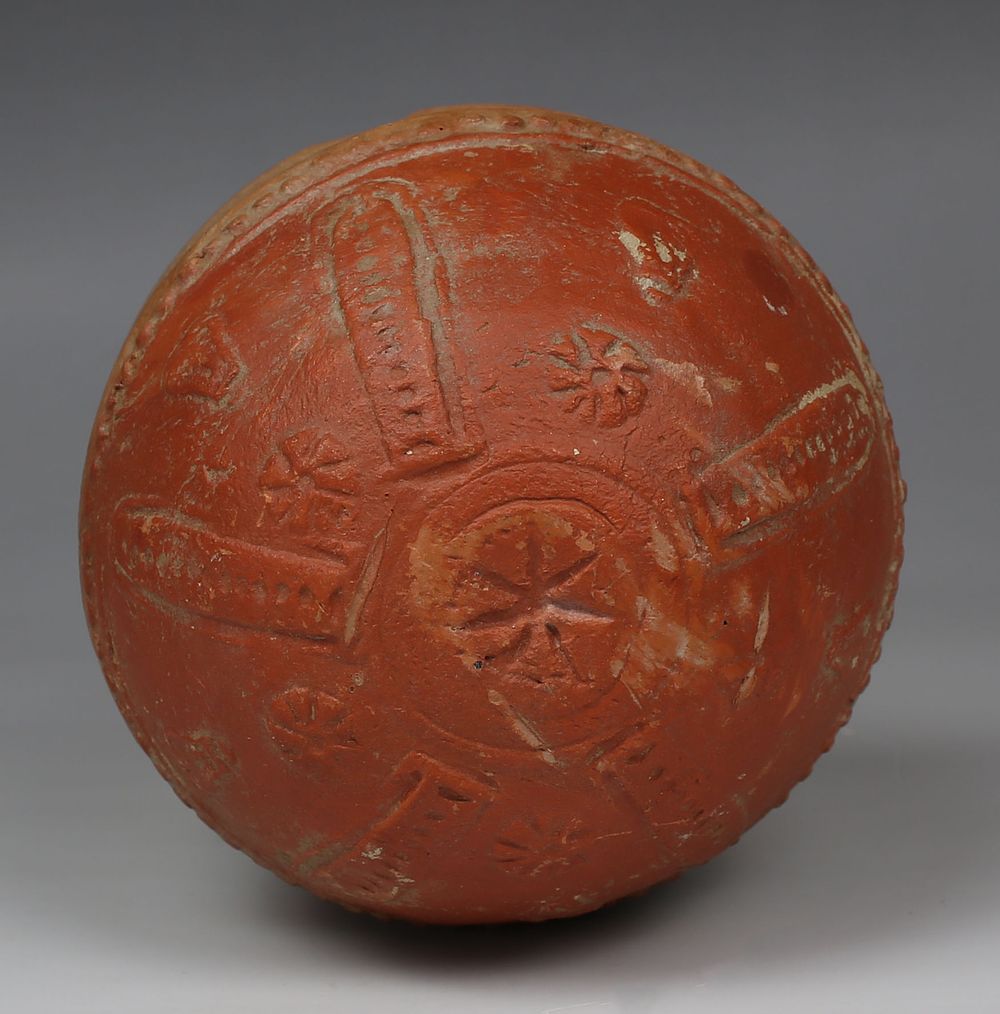
Asta Bidspirit | Greek Megarian bowl with floral
Greek Megarian bowl with floral decoration - ITEM: Megarian bowl with floral decoration MATERIAL: Pottery CULTURE: Greek PERIOD: Hellenistic period, 1st Century B.C DIMENSIONS: 75 mm x 104 mm diameter CONDITION: Good condition PROVENANCE: Ex German private collection, acquired before 2000s Comes with Certificate of Authenticity and Export Licence. If you are from outside the European Union, we will have to apply for the export licence again for your country, this takes 3 to 5 weeks and has a cost of 5% of the hammer price, this amount will be added to the final invoice. A Megarian bowl is a type of Hellenistic mold-made pottery that became popular in the 3rd to 1st centuries BCE, particularly in the eastern Mediterranean. Named after the city of Megara, where early examples were believed to have originated, these bowls were widely produced in Greece, Asia Minor, and Italy. They were typically made of fine reddish clay and covered with a thin, glossy slip that imitated the appearance of more expensive metalware, such as bronze or silver bowls. The bowls were often relatively small, designed for serving food or liquids, and their refined craftsmanship suggests they were used by the wealthy elite. One of the defining features of Megarian bowls is their mold-made relief decoration, which often covered the entire outer surface. The reliefs commonly depicted mythological scenes, floral motifs, theatrical masks, or intricate geometric patterns. Unlike earlier Greek pottery, which was painted, the designs on Megarian bowls were created using molds, allowing for mass production while maintaining detailed artistry. The production centers of these bowls, including Athens, Pergamon, and workshops in Italy, adapted their designs to local tastes, incorporating elements from Greek and Roman artistic traditions. Megarían bowls were highly valued trade items, spreading throughout the Hellenistic and early Roman world, with examples found as far as Egypt and the western Mediterranean. Their widespread distribution and stylistic variations provide insight into cultural exchanges, economic networks, and artistic influences of the period.