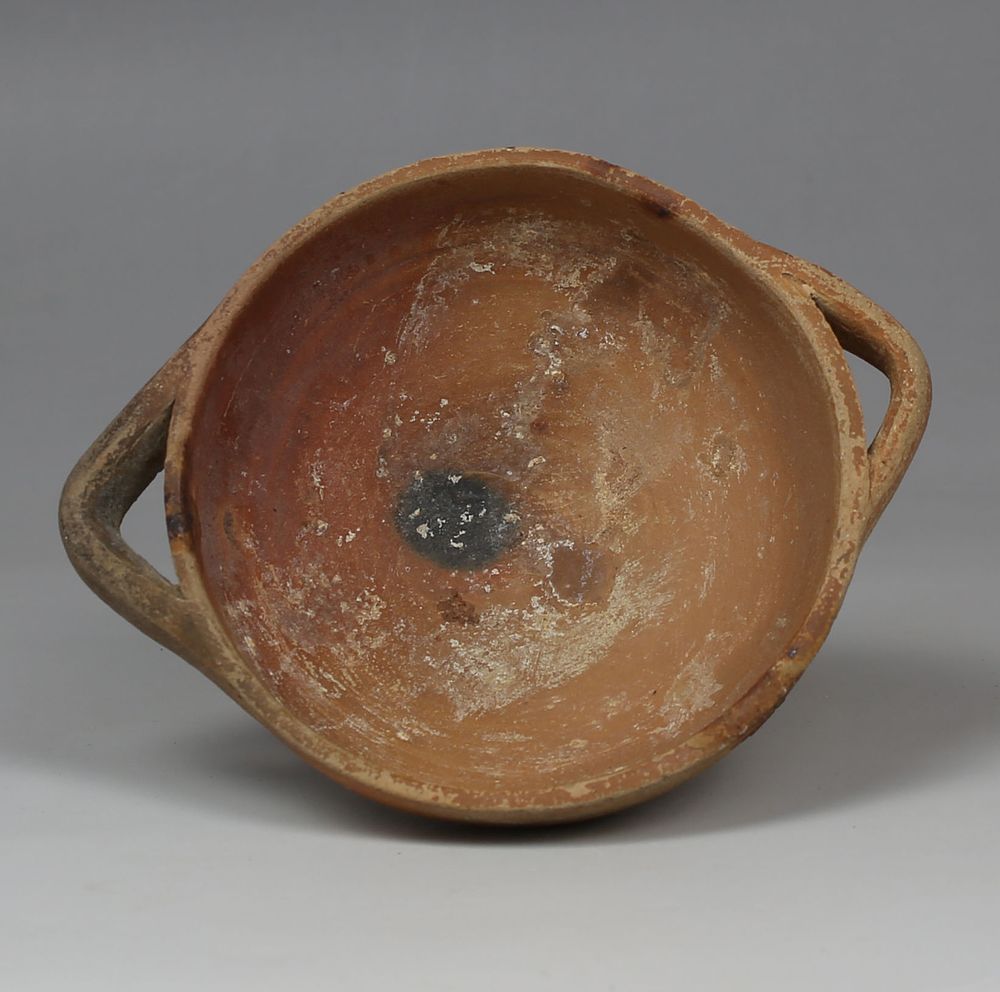
Asta Bidspirit | Greek miniature vessel
Greek miniature vessel - ITEM: Miniature vessel MATERIAL: Pottery CULTURE: Greek PERIOD: 4th Century B.C DIMENSIONS: 33 mm x 102 mm CONDITION: Good condition PROVENANCE: Ex French private collection, acquired between 1970 - 1990 Comes with Certificate of Authenticity and Export Licence. If you are from outside the European Union, we will have to apply for the export licence again for your country, this takes 4 to 6 weeks and has a cost of 5% of the amount of the sale, this amount will be added to the final invoice. Greek miniature vessels were small-scale ceramic containers used for a variety of purposes, including ritual offerings, funerary practices, and personal use. These vessels, often crafted in the same shapes as their larger counterparts, such as amphorae, oinochoai (wine jugs), kylikes (cups), and lekythoi (oil flasks), demonstrated the skill of Greek potters in creating finely detailed and proportioned works on a diminutive scale. Miniature pottery was produced throughout different periods of Greek history, from the Geometric through the Hellenistic era, and was typically decorated using the same techniques as full-sized vessels, including black-figure, red-figure, and simple geometric patterns. Some of these vessels may have served as votive offerings in sanctuaries, dedicated to gods in exchange for divine favor. In funerary contexts, miniature vessels were often placed in graves as part of burial rituals. They may have been intended as symbolic substitutes for larger and more expensive grave goods, or as representations of offerings meant to serve the deceased in the afterlife. In some cases, miniature vessels contained traces of perfumes, oils, or other valuable substances, indicating that they may have also functioned as personal items for the deceased during their lifetime. Their presence in children's graves suggests they may have been used as toys or as ritual objects meant to ensure protection in the afterlife. The widespread discovery of these small vessels across Greek burial sites highlights their ritual significance and the enduring customs surrounding death and remembrance in ancient Greek society. Beyond religious and funerary uses, Greek miniature vessels also played a role in daily life. Some were likely used to hold small quantities of perfumes, cosmetics, or medicinal substances, making them practical for both men and women. Others may have been made as souvenir items, particularly in regions where large sanctuaries attracted pilgrims who sought small, portable dedications. The diversity in shape, decoration, and context of miniature vessels reflects their multifaceted role in Greek culture, from religious devotion to domestic utility.