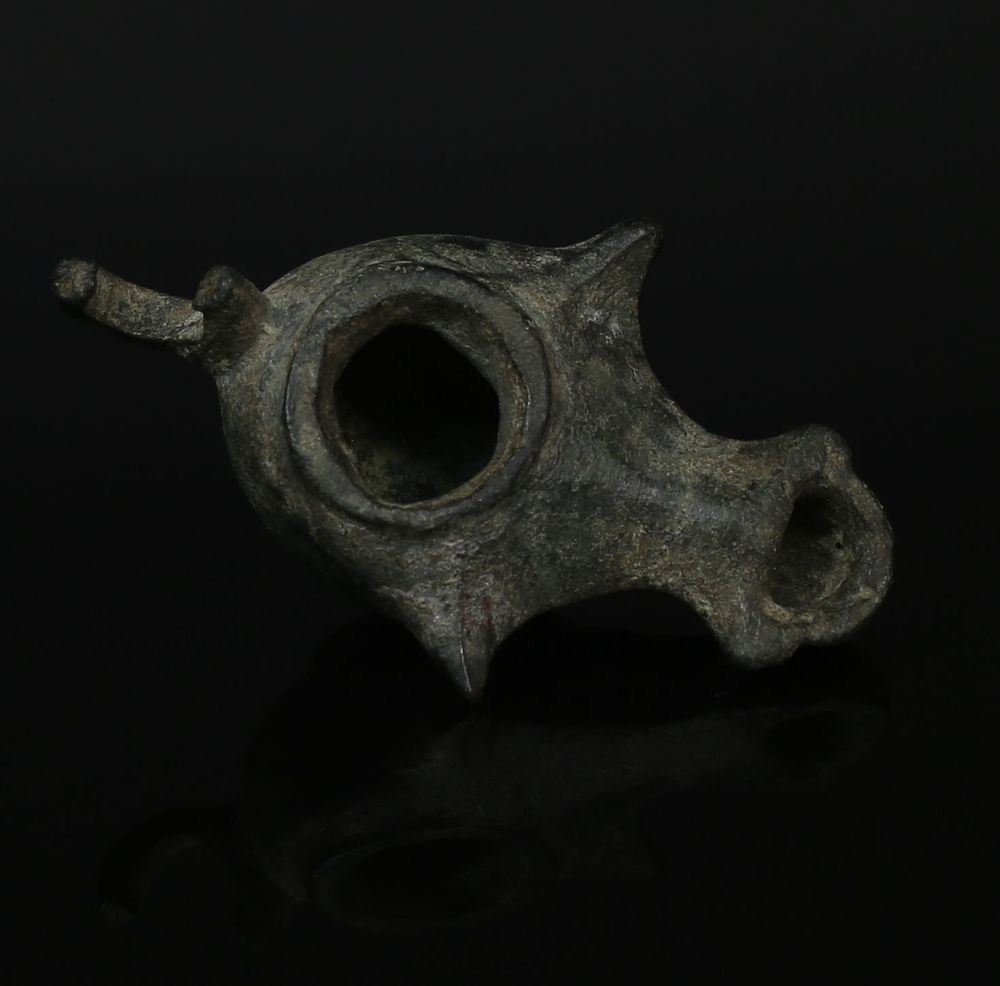
Asta Bidspirit | Roman oil lamp
Roman oil lamp - ITEM: Oil lamp MATERIAL: Bronze CULTURE: Roman PERIOD: 1st - 2nd Century A.D DIMENSIONS: 18 mm x 34 mm x 55 mm CONDITION: Good condition PROVENANCE: Ex Dutch private collection, acquired between 1970 - 1990 Comes with Certificate of Authenticity and Export Licence. If you are from outside the European Union, we will have to apply for the export licence again for your country, this takes 4 to 6 weeks and has a cost of 5% of the amount of the sale, this amount will be added to the final invoice. Roman oil lamps were an essential source of light in the ancient world, widely used in homes, temples, and public spaces throughout the Roman Empire. Typically made of terracotta, these lamps were mass-produced using molds, allowing for a wide range of shapes, sizes, and decorative motifs. Early Roman lamps were simple and functional, often with a single spout for the wick, but as production evolved, they became more elaborate, with multiple nozzles, handles, and intricate relief decorations. The lamps were fueled by olive oil, which was readily available in the Mediterranean region, making them an affordable and practical lighting solution for people of all social classes. Beyond their utilitarian function, Roman oil lamps served important symbolic and decorative roles. Many featured detailed relief designs depicting gods, myths, gladiatorial combats, animals, and everyday scenes, reflecting the artistic and cultural values of Roman society. Some lamps bore Christian symbols, such as the Chi-Rho or the fish (ichthys), indicating the growing influence of Christianity in the later Roman period. Others included inscriptions, such as manufacturers' marks or religious dedications. The presence of these lamps in domestic, ritual, and funerary contexts suggests they were used not only for illumination but also as offerings in religious ceremonies and as grave goods to provide light for the deceased in the afterlife. Roman oil lamps were produced in vast quantities, with major manufacturing centers in Italy, North Africa, and the eastern Mediterranean. They were widely exported across the empire, demonstrating the reach of Roman trade networks and cultural influence. Archaeological discoveries of oil lamps in diverse regions, from Britain to Egypt, highlight their universal presence in Roman daily life.